

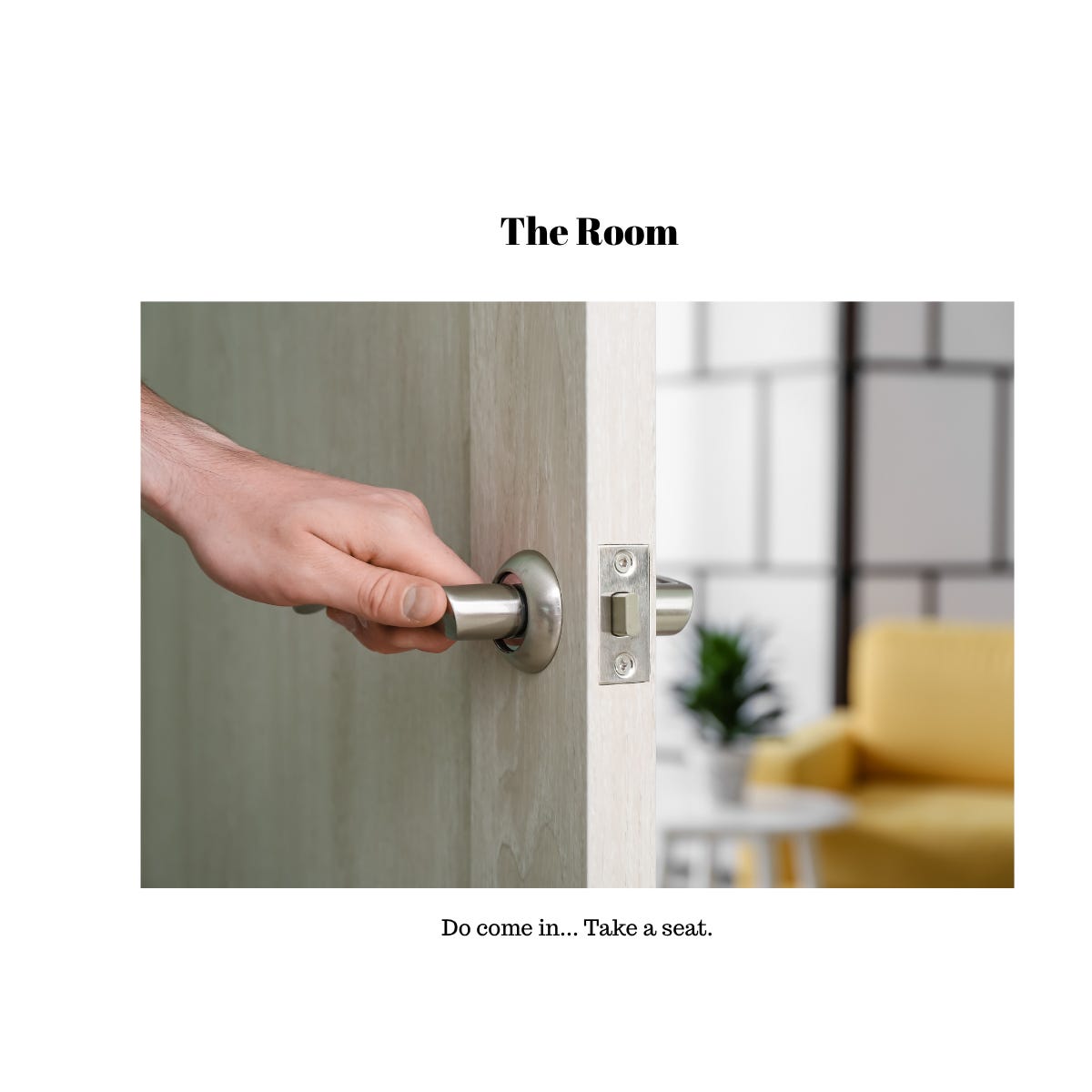
Why I’m opening this room
For more than twenty years, my work has been about rooms.
Not boardrooms or conference rooms - though I’ve been in plenty of those. I mean the rooms where decisions get made about people’s lives. The case meeting. The eligibility interview. The multi-agency meetings where client cases are discussed. The panel that decides whether a family gets help or gets turned away. I’ve spent two decades in those rooms, working alongside Māori, Pasifika and CALD whānau here in Aotearoa, and earlier in East Africa, and I learned one thing above all else:
The most important person in the room is often the one who isn’t there.
The whānau being discussed but not present. The person whose file is open on the table while they sit outside, or aren’t invited at all. Their absence doesn’t make them matter less. It makes the decision worse - because a room that can’t see someone can’t truly serve them.
I’m telling you this because the rooms are changing.
More and more, the decisions that shape vulnerable people’s lives aren’t being made by a person in a room at all. They’re being made by automated systems - algorithms deciding who gets flagged, who gets help, who gets seen, who gets reduced to a risk score. The room has become a piece of software. Lines of code. And the same question I’ve been asking for twenty years matters more now than it ever has: who’s in the room when this gets built? And who got left out? Whose voice was not captured?
That question is why I’ve spent the last while moving into AI ethics and governance. People sometimes treat that as a reinvention - a frontline community worker becoming something else. It isn’t. It’s the same work. The same conviction - that the people most affected by a system are the least likely to have shaped it, and the most likely to be harmed when it goes wrong. I haven’t changed my cause. I’ve followed it into the place where the decisions are now being made.
I will be honest, it’s only in the last year- 2025, that I’ve stepped deliberately into AI ethics - close enough to the start of the road to still remember what it looked like from the outside. And the more I learned, the more I realised ethics was only one arm of it. It was the arm that was asking is this right? But I realized that this was just one half of the whole. It wasn’t enough on its own; you also have to ask who is accountable, who decides, who can be made to answer when it goes wrong? That second question is governance - the structures and rules around a system, not just its intentions - and it’s the other arm I’m still actively navigating. The two need each other. Ethics without governance is good intentions with nothing to hold them in place. Governance without ethics is process with no conscience. We need both.
I’ve also done something a little unusual for someone coming from where I come from: I’ve gone inside the machinery. Part of my work right now is with the AI labs themselves - helping train and shape the AI systems - and it has taught me how they actually function under the hood, not how they’re described in the brochure. Sitting on both sides - the frontline, where I’ve watched what these automated systems do to people, and the inside, where I can see how they’re built — is what lets me grapple with automated decisions honestly. It’s the whole picture. And it’s what I now carry into every room: not just the practitioner’s question of who gets harmed, but a working sense of where, in the machine, the harm gets made.
This is the room I’m opening here. A room that holds two realities at once: a candid look at how these systems fail the people they’re meant to serve, and the language of AI governance to explore what we do about it — and to invite more voices into the mahi. The two sides of one coin.
The Room is where I’ll think out loud about all of this - the ethics, the harm, the design, the strange new shape of old problems. Some of it will be about the systems, and the robust frameworks that audit them, or honest explorations of how we better serve those who may fall through the cracks. Most of it, really, will be about people: the ones I’ve met over these twenty years whose lives were never as simple as the form that tried to capture them. A woman keeping a folder of screenshots to prove her own case to a system that should have held that record for her. A man whose missing paperwork was treated as his failure, when it was really the system asking the wrong question. The immigrant who is struggling to navigate the automated voice at the end of the phoneline, that only serves to trigger old traumas. You’ll meet some of them in the writing to come. My aim is for you to realize that the statistics, are real people, with real lives. I put faces to the numbers.
My practice is grounded in Ubuntu - I am because we are. It’s an African philosophy, and it has been the quiet foundation under everything I’ve done, in every room I’ve walked into, whether or not I named it out loud. It means a person is never an isolated data point. They are held in a web of relationships, history, and context, and you cannot understand them - or serve them, or build a system around them - if you simplify their complexity and flatten it away.
So that’s what this room is for. Thinking, in the open, about how we keep the human whole as these systems decide more and more of our lives. About who belongs in the room. About how to capture the nuances that could be easily missed. About making sure the people I’ve spent my life serving don’t slip through cracks that no one seems to see.
If any of that resonates with you, pull up a chair. There’s room.
Denise
Denise Barlow-Byarugaba is a Human Systems specialist and the founder of The Room Institute. She practices through the lens of Ubuntu-informed AI governance - a framework that redesigns systems that make decisions about people, from policy to automated decisions, with the communities that carry the cost of our failures. She draws on almost 30 years in community development, walking alongside Māori, Pasifika, and CALD communities across Aotearoa and East Africa. She has worked on both sides of the glass: the frontline, where she has seen what poorly designed systems do to people, and inside the build, where she has seen how they are made. She partners with government agencies and NGOs to redesign those systems so that the vulnerable are protected, as welfare policies and emerging technologies land in real lives.
Why subscribe?
Subscribe to get full access to any new articles I publish and publication archives.
Stay up-to-date
Never miss a piece - every new post is sent directly to your email inbox.
Join the conversation
Be part of a community of people who are a part of this important mahi. We need more voices. Participate in the comments section, share your opinions or ask about the work.
I welcome all contributions.